

Global Ball Valve Demand Keeps Rising: LNG, Hydrogen and Oil gas Projects Drive Component OEM Requirements
According to latest industry market research, the global ball
valve market reached USD 13.57 billion in 2026 and is forecasted to achieve steady growth at a compound annual growth rate of 3.64% through 2031. Ball valves account for the largest revenue share among all industrial valve types, widely deployed across oil & gas, LNG terminals, hydrogen infrastructure, chemical processing and energy
transition projects worldwide. While end
product market expands, global valve OEM manufacturers are putting forward higher standards for ball
valve body, ball sphere and other core pressure
bearing components in material purity, casting metallurgical quality and CNC machining precision.
LNG infrastructure construction remains one major growth engine for ball valve consumption. Global LNG export capacity saw notable increase, with multiple new liquefaction projects and receiving terminal facilities under construction across Middle East, Central Asia and Asia Pacific regions. Cryogenic ball valves working under 162 °C operating conditions are heavily specified for liquefaction, transportation and regasification processes. Such extreme low temperature scenarios impose strict requirements on valve components: casting blanks must avoid micro porosity, shrinkage and internal inclusion defects. Even tiny metallurgical flaws may evolve into leakage risks under repeated cryogenic temperature cycling. Trunnion type cryogenic ball valves are increasingly adopted for floating storage and regasification units, pushing demand for high quality cast and fully machined ball valve parts upward.
Hydrogen related energy projects further boost special grade ball valve procurement volume. High pressure hydrogen pipelines and hydrogen storage facilities require ball valves with excellent anti hydrogen embrittlement performance. Ordinary carbon steel materials cannot satisfy operating conditions, so austenitic stainless steel, duplex steel and super duplex alloys become preferred material selections for valve body and ball sphere, and alloy material demand maintains relatively fast growth rate. Apart from material grades, heat treatment control, non destructive inspection and full traceable material certificates such as EN 10204 3.1 / 3.2 have turned into essential document requirements for hydrogen project component suppliers.
Traditional oil gas projects in Middle East and Central Asia keep releasing large volume ball valve orders. API 6D standard ball valves are widely used for natural gas transmission pipelines and on site process facilities. For sour gas working conditions containing hydrogen sulfide, components need to comply with NACE MR0175 anti sulfur stress cracking specifications. Zero percent acceptance of casting defects such as slag inclusion and surface crack forces valve OEM enterprises to select foundries equipped with complete NDT inspection capacity including PT and MT penetration testing. Many international valve brand owners choose to outsource casting blanks and precision machined components to qualified OEM factories, focusing their own resources on final assembly, testing and project bid business.
Apart from new built projects, the global MRO aftermarket brings stable incremental demand for ball valve spare parts. Large quantities of chemical plants, refineries and pipeline installations in Europe and North America enter the equipment maintenance cycle. Plenty of legacy ball valve models have stopped original part supply, generating substantial requests for small batch customized valve body and ball sphere components. Different from mass production orders, MRO oriented parts feature multiple product variants, small batch quantity and short sample delivery cycle. The capability of drawing evaluation, reverse engineering from physical samples and rapid mold development becomes important competitive advantage for component manufacturers.
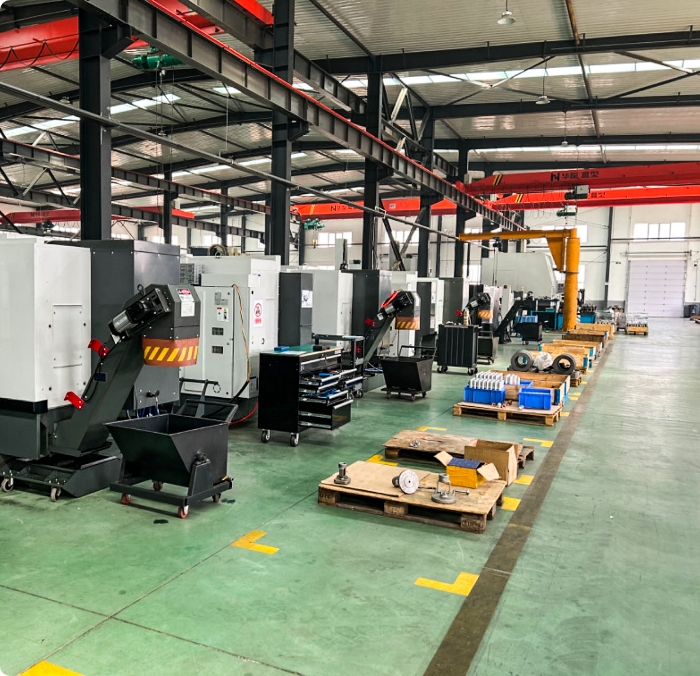
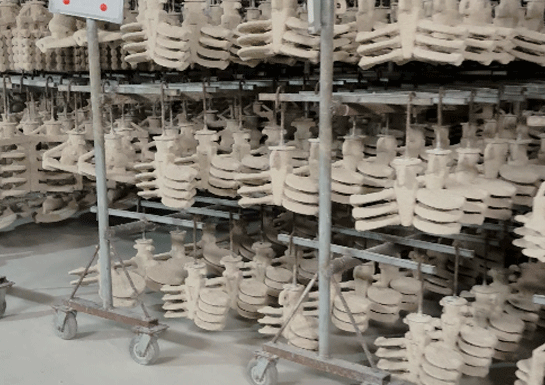
Against such market background, manufacturing processes determine core competitiveness of ball valve components. Silica sol investment casting gains wider recognition for stainless steel, duplex grade ball valve body and ball sphere blanks. Compared with conventional sand casting, investment casting delivers near net shape castings with smooth surface and stable dimensional tolerance, effectively reducing subsequent CNC machining allowance and lowering risks of internal shrinkage porosity in pressure bearing zones. After casting, multi axis CNC machining is indispensable: ball sphere spherical surface, valve rod holes and seat mounting grooves need high precision processing to guarantee concentricity, spherical roundness and reliable tight shut off sealing performance of finished ball valves.
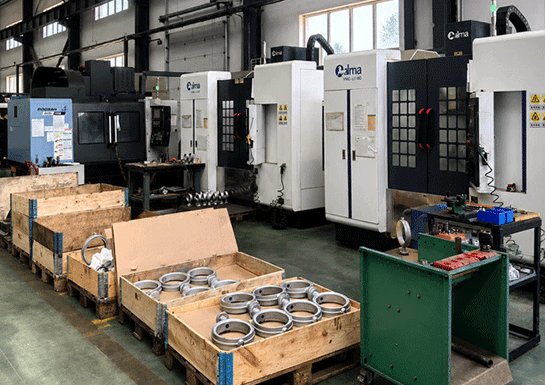
As an OEM manufacturer integrating silica sol investment casting and multi axis CNC finishing, Puyue Industrial provides one stop manufacturing solutions for custom ball valve body and ball sphere parts. Our engineering team carries out DFM review in early project phase, optimizing casting gating scheme and wall thickness distribution to avoid deformation and metallurgical defects. Complete incoming material spectral inspection, heat treatment management and PT non destructive testing workflows are implemented throughout production. Supported by ISO 9001, PED and LRQA certifications, we are capable of supplying components for LNG, hydrogen, oil gas and corrosive condition projects, and can deliver full set traceable inspection documents to match international project supplier access requirements. We accept both mass production OEM orders and small batch MRO spare part customization based on customer drawings or physical samples.
Global ball valve market growth is driven by energy infrastructure investment, yet competition among component suppliers is shifting from simple price comparison to comprehensive capacity covering material control, casting quality, precision machining level, inspection capability and document service. Manufacturers owning stable casting and machining integrated capacity will occupy more shares in the global ball valve supply chain.
If you are sourcing custom cast and CNC finished ball valve body or ball sphere components, please send your drawings for our technical assessment and competitive quotation. Our sales and engineering team are ready to support your projects.
LNG infrastructure construction remains one major growth engine for ball valve consumption. Global LNG export capacity saw notable increase, with multiple new liquefaction projects and receiving terminal facilities under construction across Middle East, Central Asia and Asia Pacific regions. Cryogenic ball valves working under 162 °C operating conditions are heavily specified for liquefaction, transportation and regasification processes. Such extreme low temperature scenarios impose strict requirements on valve components: casting blanks must avoid micro porosity, shrinkage and internal inclusion defects. Even tiny metallurgical flaws may evolve into leakage risks under repeated cryogenic temperature cycling. Trunnion type cryogenic ball valves are increasingly adopted for floating storage and regasification units, pushing demand for high quality cast and fully machined ball valve parts upward.
Hydrogen related energy projects further boost special grade ball valve procurement volume. High pressure hydrogen pipelines and hydrogen storage facilities require ball valves with excellent anti hydrogen embrittlement performance. Ordinary carbon steel materials cannot satisfy operating conditions, so austenitic stainless steel, duplex steel and super duplex alloys become preferred material selections for valve body and ball sphere, and alloy material demand maintains relatively fast growth rate. Apart from material grades, heat treatment control, non destructive inspection and full traceable material certificates such as EN 10204 3.1 / 3.2 have turned into essential document requirements for hydrogen project component suppliers.
Traditional oil gas projects in Middle East and Central Asia keep releasing large volume ball valve orders. API 6D standard ball valves are widely used for natural gas transmission pipelines and on site process facilities. For sour gas working conditions containing hydrogen sulfide, components need to comply with NACE MR0175 anti sulfur stress cracking specifications. Zero percent acceptance of casting defects such as slag inclusion and surface crack forces valve OEM enterprises to select foundries equipped with complete NDT inspection capacity including PT and MT penetration testing. Many international valve brand owners choose to outsource casting blanks and precision machined components to qualified OEM factories, focusing their own resources on final assembly, testing and project bid business.
Apart from new built projects, the global MRO aftermarket brings stable incremental demand for ball valve spare parts. Large quantities of chemical plants, refineries and pipeline installations in Europe and North America enter the equipment maintenance cycle. Plenty of legacy ball valve models have stopped original part supply, generating substantial requests for small batch customized valve body and ball sphere components. Different from mass production orders, MRO oriented parts feature multiple product variants, small batch quantity and short sample delivery cycle. The capability of drawing evaluation, reverse engineering from physical samples and rapid mold development becomes important competitive advantage for component manufacturers.
Against such market background, manufacturing processes determine core competitiveness of ball valve components. Silica sol investment casting gains wider recognition for stainless steel, duplex grade ball valve body and ball sphere blanks. Compared with conventional sand casting, investment casting delivers near net shape castings with smooth surface and stable dimensional tolerance, effectively reducing subsequent CNC machining allowance and lowering risks of internal shrinkage porosity in pressure bearing zones. After casting, multi axis CNC machining is indispensable: ball sphere spherical surface, valve rod holes and seat mounting grooves need high precision processing to guarantee concentricity, spherical roundness and reliable tight shut off sealing performance of finished ball valves.
As an OEM manufacturer integrating silica sol investment casting and multi axis CNC finishing, Puyue Industrial provides one stop manufacturing solutions for custom ball valve body and ball sphere parts. Our engineering team carries out DFM review in early project phase, optimizing casting gating scheme and wall thickness distribution to avoid deformation and metallurgical defects. Complete incoming material spectral inspection, heat treatment management and PT non destructive testing workflows are implemented throughout production. Supported by ISO 9001, PED and LRQA certifications, we are capable of supplying components for LNG, hydrogen, oil gas and corrosive condition projects, and can deliver full set traceable inspection documents to match international project supplier access requirements. We accept both mass production OEM orders and small batch MRO spare part customization based on customer drawings or physical samples.
Global ball valve market growth is driven by energy infrastructure investment, yet competition among component suppliers is shifting from simple price comparison to comprehensive capacity covering material control, casting quality, precision machining level, inspection capability and document service. Manufacturers owning stable casting and machining integrated capacity will occupy more shares in the global ball valve supply chain.
If you are sourcing custom cast and CNC finished ball valve body or ball sphere components, please send your drawings for our technical assessment and competitive quotation. Our sales and engineering team are ready to support your projects.
Get A Quote
Related News Recommendations
Send Your Enquiry
Send Us Your Request And We Will Get Back To You As Soon As Possible.

Shenyang Puyue Industrial Co., Ltd. Was
Founded In 2007, Is A Collection Of Scientific